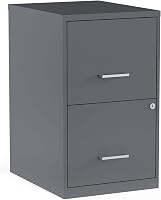
What Is a Vertical File Cabinet and Who Is It For?
A vertical file cabinet is a tall, narrow cabinet with drawers that hold files from front to back. It suits people who need organized paper storage but have limited floor space.
On this page (9 sections)
- What is a vertical file cabinet?
- Who is a vertical file cabinet for?
- How is a vertical file cabinet different from a lateral one?
- What files fit in a vertical file cabinet?
- What should you measure before choosing one?
- What features matter in a vertical file cabinet?
- Which vertical file cabinets match common needs?
- How do you organize a vertical file cabinet?
- Is a vertical file cabinet right for you?
A vertical file cabinet is a tall, narrow cabinet with drawers that hold files from front to back. It suits people who need organized paper storage but have limited floor space.
The drawers take up less wall width than a lateral cabinet, while the cabinet's height provides room for multiple file categories. Before choosing one, check your available floor space, paper sizes, and how often you'll need to reach the files.
What is a vertical file cabinet?
A vertical file cabinet is a narrow storage cabinet with stacked drawers for hanging folders. The folders typically hang from rails that run across each drawer, letting you flip through papers while the cabinet uses a smaller footprint.
The number of drawers varies. A 2-drawer cabinet may fit under some desks, while taller models can hold more folders but need more vertical clearance.
Vertical cabinets are made from different materials, including metal and engineered wood. A lock, adjustable rails, and anti-tip hardware are features to check when they matter for your room or files.
Who is a vertical file cabinet for?
A vertical file cabinet is a practical choice when you need file storage but have limited floor width. It can work in a home office, shared workspace, or small business office.
It may suit you if you:
- File paper documents by person, project, or year.
- Have a narrow space beside a desk or wall.
- Prefer several separate drawers for different categories.
- Need a cabinet with a lock for private papers.
A wide lateral cabinet may be a better fit if you have more floor width, want a broader top surface, or prefer to see files across a wider drawer. For more options, compare the best filing cabinets for home.
How is a vertical file cabinet different from a lateral one?
A vertical file cabinet is taller and narrower, while a lateral file cabinet is shorter and wider. Vertical drawers often hold folders from front to back; lateral drawers commonly arrange them from side to side.
That difference affects where each cabinet fits. A narrow wall gap may work for a vertical model, while a lateral cabinet needs more width but may offer a wide top for a printer or other office items.
Look beyond the label and compare the cabinet's actual dimensions. Our guide to 2- or 3-drawer file cabinets can help you weigh drawer count against the space you have.
What files fit in a vertical file cabinet?
A vertical file cabinet fits the folder sizes its drawer rails support. Common options include letter-size folders, and some models adjust to accept A4 or legal-size hanging folders.
Don't assume every cabinet supports every paper format. Check the stated file compatibility, then match it to the folders you already use.
If you're unsure about folder dimensions, see what size hanging file folders you need. For help choosing between letter and legal paper storage, read letter vs. legal file cabinets.
Does drawer depth tell you which files fit?
Drawer depth alone doesn't tell you which hanging folders fit. The rail position and drawer width determine file compatibility, so check the supported folder formats before buying.
A deep drawer may have room for supplies in addition to files, but that doesn't guarantee it can hold legal-size folders. Confirm compatibility for each format you plan to store.
What should you measure before choosing one?
Measure the space where the cabinet will sit and the clearance needed to open its drawers. Include nearby desks, doors, and walkways in your check.
Compare these measurements with the cabinet's width, depth, and height. Leave enough room in front for the drawers to extend, especially in a narrow office where a chair or doorway might block access.
Also check whether the cabinet will fit through the route into the room, including doorways and tight turns. If you're planning a larger paper system, how to organize paperwork at home can help you decide how much drawer space you need.
What features matter in a vertical file cabinet?
Choose features based on your papers, room, and daily routine. Drawer capacity, file-size support, locking, and stability are useful details to compare.
- Drawer count: More drawers can separate categories, but a taller cabinet needs more overhead clearance.
- File-size support: Adjustable rails can accommodate more than one folder format on some models.
- Locking: A keyed lock may help limit access to stored papers.
- Drawer slides: Ball-bearing slides are designed to help drawers open and close smoothly.
- Stability: An anti-tip mechanism or wall attachment may help reduce tipping risk.
- Assembly: Check whether the cabinet needs assembly and whether instructions are included.
A lock doesn't replace secure handling of sensitive information. Keep keys controlled and follow the cabinet's safety instructions, including any guidance about anchoring it to a wall.
Which vertical file cabinets match common needs?
These vertical file cabinets suit different needs. The Staples model has 3 drawers for letter-size files, BYNSOE has 4 drawers with rails for A4, letter, or legal folders, and VASAGLE has 4 individually lockable drawers for A4 or letter files.
Who might choose the Staples 3-drawer cabinet?
The Staples cabinet may fit someone who wants a shorter vertical cabinet for letter-size files. It has 3 drawers, including a smaller accessory drawer for pens and office tools.
It measures 14.3 in wide, 18.9 in deep, and 26.8 in high. The cabinet is partially assembled and has ball-bearing drawer glides.
Its file support is for letter-size hanging files, so choose another option if you need legal-size folders. Check the depth and drawer clearance against your desk and walkway.
Who might choose the BYNSOE 4-drawer cabinet?
The BYNSOE cabinet may suit someone who wants four metal drawers and adjustable hanging rails. Its rails can accommodate A4, letter, or legal-size hanging folders.
It measures 15 in wide, 17.71 in deep, and 50.11 in high, and requires assembly. Its interlocking system prevents another drawer from opening while one is open.
Check that its depth and height fit your room, and follow the assembly instructions. If a drawer sits too high to close, reconnect it to the rails.
Who might choose the VASAGLE 4-drawer cabinet?
The VASAGLE cabinet may work for someone who wants four drawers with separate locks and adjustable rails for A4 or letter-size folders. Its rails aren't compatible with legal-size files.
It measures 16.1 in wide, 15.7 in deep, and 53.3 in high. The cabinet is made from particleboard and MDF, and it includes two anti-tip kits for wall attachment.
Choose it if A4 or letter files cover your needs. Secure the cabinet to the wall with the included kit as instructed.
How do you organize a vertical file cabinet?
Organize a vertical file cabinet by giving each drawer a clear job. Separate categories such as household records, bills, medical paperwork, or work projects, then label folders so you can find them quickly.
Put frequently used folders in the easiest drawer to reach. Avoid packing the drawers so tightly that folders catch on one another or become hard to remove.
For a step-by-step filing system, see how to organize paperwork at home with a file cabinet. If folders keep falling over as a drawer empties, how to keep files from falling in a file cabinet covers ways to keep them upright.
Is a vertical file cabinet right for you?
Choose a vertical file cabinet if you want stacked file drawers in a narrow footprint. Pick the drawer count and folder compatibility that match your papers, then confirm the cabinet fits with its drawers open.
For a shorter option, consider the Staples model. If you need four drawers and legal-size support, compare BYNSOE; if you want separate drawer locks and use A4 or letter files, consider VASAGLE.
Explore the best vertical filing cabinets for more choices.
Frequently asked questions
What is the difference between a vertical and lateral file cabinet?
A vertical file cabinet is taller and narrower, with drawers that usually hold files from front to back. A lateral cabinet is wider and often holds files side to side.
Choose vertical when floor width is limited; choose lateral when you want a broad top or easier access across a wide drawer.
Are vertical file cabinets good for home offices?
Yes, a vertical file cabinet can suit a home office when you need dedicated paper storage and have limited floor space. Check the cabinet's width, depth, height, drawer count, and file size support, then leave room to open each drawer fully.
What files fit in a vertical file cabinet?
It depends on the cabinet's drawer width and hanging rails. Some support letter-size folders, while others can adjust for A4 or legal-size folders.
Check which formats it accommodates and compare them with your papers before buying.
How do I choose a vertical file cabinet?
Start with the paper sizes you file and the room available for the cabinet and open drawers. Then compare drawer count, locking needs, materials, assembly, and stability features.
Measure the intended spot and check whether the rails support your hanging folders.