Letter vs Legal File Cabinet: Which Size Fits? (October 2026)
Choose a letter cabinet for mostly 8.5 x 11 in papers, a legal cabinet for regular 8.5 x 14 in papers, or adjustable rails for both. Check the hanging-folder fit and the cabinet's outside dimensions before you choose.
On this page (8 sections)
- Letter vs legal file cabinet: what is the difference?
- Which cabinet fits your paperwork?
- Can one cabinet hold both letter and legal folders?
- How should you measure for the cabinet?
- How do you set up letter and legal folders?
- What mistakes should you avoid?
- Which letter vs legal file cabinet should you choose?
- Related file cabinet guides
Choose a letter cabinet for standard 8.5 x 11 in papers, a legal cabinet for longer 8.5 x 14 in papers, or adjustable rails if you file both. In a letter vs legal file cabinet comparison, the key is whether the hanging-folder setup fits your records and the cabinet fits your room.
Paper size is only part of the decision. The folder has to hang from the cabinet's rails or rods, and the drawer needs enough usable space for it to move without catching.
If most of your records are bills, forms, and school papers, a letter setup is usually the practical choice. If you regularly file long documents, look for a legal setup or adjustable rails that support both sizes.
 Best for home filing
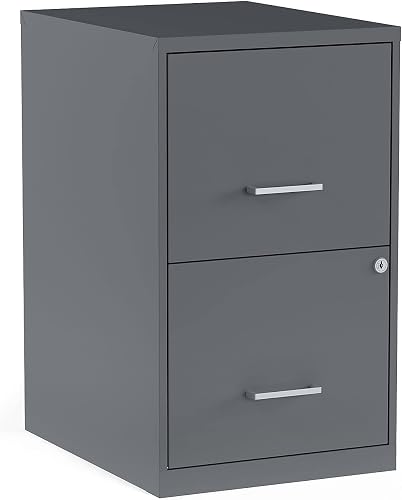
Staples 2-Drawer Vertical Letter/Legal File Cabinet
 Best for changing file sizes
BYNSOE 4-Drawer Vertical File Cabinet with Lock
Letter vs legal file cabinet: what is the difference?
Letter cabinets fit folders for 8.5 x 11 in paper; legal cabinets fit folders for 8.5 x 14 in paper. Legal paper is 3 in longer, so its folder needs a longer hanging span.
Those measurements describe the paper, not the cabinet. The folder and rail arrangement determine how it hangs, while cabinet designs differ in outside size and usable drawer space.
A deep drawer is not automatically configured for legal folders. Look for support for the folder size you use, or adjustable rails that let you change the setup.
For help matching folders to your papers and rails, read our guide to choosing the right hanging file folder size. If this is your first cabinet, our file cabinet setup guide can help you plan folders and sections.
How do legal folders fit in a file cabinet?
Legal folders hang from rails or rods set to span the folder's width. The drawer needs enough room for that span and clearance for folders to move freely.
A cabinet made for letter folders may have rails in a fixed position. A loose sheet might fit in a drawer, but that does not mean a legal hanging folder will hang correctly.
Check the cabinet's stated folder fit before buying. When the description names multiple sizes, make sure it means hanging folders rather than loose sheets.
Which cabinet fits your paperwork?
Choose the folder size that matches the documents you file most often. A few oversized papers can often be stored separately rather than making every drawer larger.
Letter folders suit many everyday records, including bills, school papers, and standard forms. If those are most of your files, a letter setup keeps your folders consistent and avoids unused capacity.
Legal folders suit longer documents that need to remain flat. If you file them regularly, a cabinet that supports their full hanging span can spare you from folding papers or storing them outside the cabinet.
When is a letter file cabinet the right choice?
Choose letter size when most of your folders hold standard sheets and you want a simple filing system. It can also make it easier to keep all your folders and rails in one format.
The Staples 2-Drawer Vertical Letter/Legal File Cabinet is made for home or moderate use, and its high-side drawers accommodate letter-size hanging files. It also has a key lock for records you want secured.
Skip this letter-focused choice if you regularly file long legal folders. The stated fit is letter-size hanging files, so choose a cabinet with clear legal support if those documents are part of your routine.
When is a legal file cabinet the right choice?
Choose legal size if long documents are a regular part of your filing routine. They can stay flat in their hanging folders instead of being folded to fit a shorter span.
For both letter and legal records, consider a cabinet that supports multiple sizes. The BYNSOE has adjustable hanging rods for A4, letter, or legal folders, and one lock secures all 4 drawers.
Its interlock prevents other drawers from opening while one is open.
The Aobabo accommodates letter and legal-size folders, with adjustable feet to help level it on an uneven floor. Its interlocking system allows one drawer to open at a time, and a single lock secures all 4 drawers.
Both four-drawer cabinets are about 50 in tall. Measure the intended spot first: the BYNSOE is 50.11 in tall and the Aobabo is 52 in tall.
Can one cabinet hold both letter and legal folders?
Yes, if its rails or hanging rods support both folder sizes and can be set up for them. Check that the drawer has enough usable space for the folders you plan to file.
The Aobabo accommodates letter and legal folders. The BYNSOE supports A4, letter, or legal hanging folders through adjustable rods, which gives you more choice when assigning drawer space.
The Staples cabinet is specified for letter-size hanging files. If you need legal folders, confirm that its rail setup supports them before buying instead of assuming the name means both sizes will fit.
A mixed-size cabinet works best when each drawer has a clear purpose. Keep letter and legal folders in separate sections where possible, then label drawers so everyone knows where each file belongs.
How should you measure for the cabinet?
Measure the cabinet's outside dimensions, the usable drawer space, and the route to its final spot. Paper measurements alone don't tell you whether the cabinet fits your room.
Check width, depth, and height, including space around nearby walls, desks, and doors. Leave room to pull the drawers fully open and stand in front of them.
The Staples cabinet measures 18.9 x 14.3 x 24.1 in. The BYNSOE measures 17.71 x 15 x 50.11 in, and the Aobabo measures 17.7 x 15 x 52 in; compare those outside dimensions with your available floor and wall space.
Outside measurements do not show the clear space inside a drawer. If usable drawer dimensions are unavailable, ask for the rail span or choose a cabinet that clearly states it supports your folder size.
Measure doorways and turns along the delivery route, too. A tall cabinet may be hard to place through a narrow path even when its footprint fits beside your desk.
How do you set up letter and legal folders?
Set the rails for the folder size, then group papers into labeled sections before filling every drawer. A consistent layout makes it easier to file documents and retrieve them later.
Start by sorting papers into letter and legal groups. For cabinets with adjustable rods, configure each drawer according to the folders it will hold, following the included assembly and setup instructions.
Choose a filing order that suits your records, such as household, work, or tax documents. Use clear labels and leave enough room for folders to slide rather than packing them tightly against one another.
If you use both folder sizes, assign each a specific drawer or section when the cabinet allows it. Our guide to keeping files upright in a cabinet covers ways to reduce slipping and make folders easier to pull.
What mistakes should you avoid?
Don't choose by paper size alone, assume every drawer adjusts, or overlook how much room the cabinet needs. Those mistakes can leave you with folders that don't hang properly or drawers you can't open fully.
Avoid buying legal folders before checking the cabinet's support for them. A sheet of paper can fit inside a drawer even when a hanging folder cannot attach to its rails.
Don't count on a cabinet being adjustable unless its design says so. The Staples cabinet specifies letter-size hanging files, while the BYNSOE has adjustable rods and the Aobabo accommodates both letter and legal folders.
Finally, don't measure only the floor footprint. Account for the full height, drawer clearance, and delivery route, and consider the cabinet's loaded weight when choosing its location.
Which letter vs legal file cabinet should you choose?
Pick a letter cabinet for mostly standard papers, a legal cabinet for frequent long documents, and an adjustable model for a regular mix. Then match the cabinet's dimensions and drawer layout to your room and filing habits.
The Staples cabinet suits home or moderate use when letter-size folders are enough. Choose the BYNSOE if you want adjustable rails for A4, letter, or legal folders; choose the Aobabo for a stated fit with both letter and legal folders and adjustable leveling feet.
Count the folders you expect to keep and measure the space before deciding. For help choosing a cabinet style for the rest of your storage needs, see filing cabinet vs storage cabinet.
Related file cabinet guides
- Best filing cabinets for home
- What size hanging file folders do you need?
- What is a vertical file cabinet?
- How to set up a file cabinet
Frequently asked questions
What is the difference between letter and legal file cabinets?
A letter file cabinet is set up for folders holding 8.5 x 11 in paper, while a legal setup fits folders for 8.5 x 14 in paper. Legal folders need a longer hanging span, so check the cabinet's rails or rods and usable drawer space before you buy.
Can a letter file cabinet hold legal folders?
Some cabinets can hold both, but the label alone doesn't confirm how the folders hang. Check whether the rails or hanging-file rods can be set for legal folders, and measure the usable drawer space if the maker gives dimensions.
Do legal file cabinets take up more room?
A cabinet configured for legal folders generally needs more drawer space for the longer folder span, though the outside size depends on its design. Compare the cabinet's full dimensions and inside file space, then measure your room and delivery path.
Which file cabinet size should I choose?
Choose letter size if nearly all your records are standard 8.5 x 11 in papers. Choose legal size if you regularly file 8.5 x 14 in documents, or choose an adjustable cabinet that supports both when your paperwork includes a mix.


