Filing Cabinet vs Storage Cabinet: Which Do You Need? (October 2026)
Choose a filing cabinet for hanging folders and organized paper files; choose a storage cabinet for mixed office supplies and equipment. A hybrid works when you need both, provided its file drawer fits your folders.
On this page (6 sections)
Choose a filing cabinet for hanging folders and organized paper files; choose a storage cabinet for mixed office supplies and equipment. The filing cabinet vs storage cabinet decision comes down to what you store, how you sort it and how often you need access.
A filing cabinet gives papers a defined place, often with drawers and hanging rails. A storage cabinet can hold a wider mix of supplies, equipment and household office items, but its drawers may not be set up for folders.
Some furniture combines both functions. The Homieasy, for example, has a letter-file drawer, open shelves and a lower cupboard.
Compare the layouts below, then choose the type that fits your regular tasks.

Filing cabinet vs storage cabinet: what is the difference?
A filing cabinet is designed around paper records; a storage cabinet is designed for a broader range of belongings. The word “cabinet” alone doesn't tell you whether its drawers support hanging files.
Filing cabinets commonly use front-opening drawers. Hanging rails hold folders upright, making labels easier to scan and papers easier to sort by household, project or year.
Storage cabinets vary more. They may have shelves, ordinary drawers, doors or a work surface, so you can store items that don't belong in a hanging-file system.
Which one keeps paper files easier to find?
A filing cabinet is usually the clearer choice when you sort papers into folders and need to retrieve them by label. Hanging files keep folders in a row instead of leaving loose papers stacked in a pile.
You can organize by topic, such as taxes, home repairs or school records. Choose a cabinet that fits the folder size you use.
Our guide to letter and legal file cabinet sizes explains what to check before settling on a drawer.
A storage cabinet can hold paper too, but ordinary drawers and shelves may need separate folders, boxes or trays. If papers are your main concern, first consider how to organize paperwork at home.
When does a storage cabinet make more sense?
A storage cabinet makes sense when you need room for mixed supplies instead of a dedicated row of hanging folders. Printer paper, stationery, small devices and other office items may fit better in shelves or general-purpose drawers.
Think about the items you'll reach for most often. A wide desktop, open shelves or a cupboard can be useful when the cabinet also needs to hold equipment or display books.
For a closer look at vertical designs, see what a vertical file cabinet is. A vertical shape can save floor width, but its interior still needs to match what you'll store.
Which type fits your home office?
Choose by the main job the cabinet needs to do: filing, general storage or both. Don't pay for a large file drawer if you won't use folders, and don't expect open shelving to replace a filing system.
A small workspace with mostly household records may need a compact file cabinet. A work area with supplies, a printer and only a few folders may be better served by general storage or a hybrid piece.
Who should choose a filing cabinet?
Choose a filing cabinet if you sort and revisit paper records throughout the year. It can keep documents grouped and upright, especially when its rails fit your folder size.
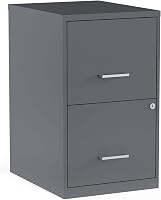
The MIIIKO has 4 high-side drawers and adjustable hanging rails for letter, legal and A4 files. Its top lock secures every drawer, a useful arrangement when you want one lock for your paper records.
A dedicated file cabinet may be the wrong choice if most of your storage consists of equipment, craft supplies or items that don't fit folders. Before choosing a vertical file cabinet, also consider drawer reach and available width.
Our home filing cabinet guide compares features to consider when paper records are your main storage need.
Who should choose a storage cabinet?
Choose a general storage cabinet if your daily clutter includes more than paper files. Several drawers can separate supplies, while a work surface can keep a printer or scanner off your desk.
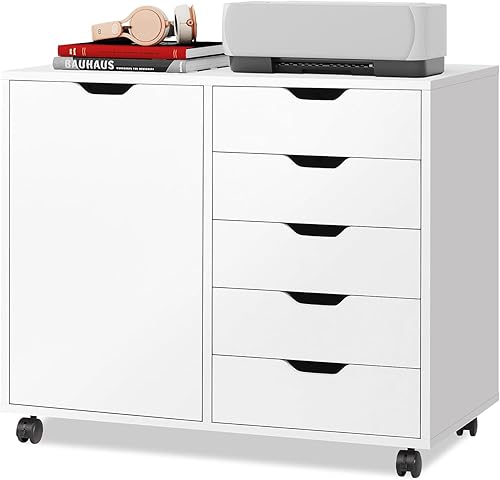
The DEVAISE has 5 drawers and a desktop for a printer or scanner. Four wheels let you reposition it, and brakes on the front 2 casters help hold it in place.
Its drawers aren't described as having hanging rails. Skip it as your main filing system if you need hanging folders, unless you have another way to keep your records sorted and upright.
When is a hybrid worth choosing?
A hybrid cabinet suits a workspace that needs both paper filing and general storage. Check how much room is dedicated to each job so its layout doesn't leave you short on either side.
The Homieasy has a top drawer with hanging bars for letter-size files, 2 open shelves and a lower cabinet for supplies. The top drawer locks, and a built-in power strip has 3 outlets and 2 USB ports.
Choose this layout when you need visible shelf space and one file drawer. It may not suit you if you keep many years of records or need legal-size hanging folders, since its rails are for letter-size files.
What should you check before choosing?
Check the cabinet's dimensions, opening space and storage features against the items you actually keep. Focus on rails, shelves, drawer layout and how you'll reach what goes inside.
Measure the spot where the cabinet will stand, including its height and width. Then check the route into the room, including doorways and corners, before buying a heavy or assembled piece.
For a file cabinet, confirm the supported folder size and how the rails are adjusted. For a storage cabinet, measure the largest supply or device you plan to put inside, including its height and depth.
How much space do drawers need?
Drawers need clear space in front so they can open far enough for you to reach their contents. A cabinet that fits between a desk and wall may still be hard to use if its drawers hit a chair or block a walkway.
Mark the cabinet footprint and the drawer extension with tape. Walk around the outline and check that you can stand in front without moving another piece of furniture.
A cabinet with wheels can be repositioned, but it still needs a sensible parking spot. Engage the brakes on a rolling unit when you want it to stay put.
Do you need a lock?
A lock helps limit access to paperwork or small supplies. Check whether it secures one drawer or several, and decide how you'll keep the key available to the people who need it.
The MIIIKO's top lock secures all 4 drawers. The Homieasy has a lock on its top file drawer, so its lower storage areas have a different access arrangement.
A lock doesn't change what belongs in the cabinet. Follow your workplace or household rules for sensitive records, and protect important documents from damage as well as casual access.
Is a file cabinet better for small rooms?
A compact vertical file cabinet can use less floor width than a wide cabinet, but it may be taller. Check its height against shelves, windows and nearby equipment.
The MIIIKO is 17.71 in deep, 15 in wide and 50.11 in tall. The Homieasy is 15.8 in deep, 24.8 in wide and 57.9 in tall, with open shelves and a lower cabinet.
A low, wide storage cabinet can double as a work surface, but it takes up more wall width. Choose a shape that leaves enough space to move around and open the drawers.
What are common cabinet buying mistakes?
The most common mistake is assuming every drawer accepts hanging folders. Look for rails and supported file sizes, then match them to your actual folders before deciding.
Another mistake is buying by overall dimensions alone. A cabinet can fit the room but still block a walkway, sit under a shelf too closely or leave too little room to open a drawer.
Don't choose a hybrid just because it has several kinds of storage. Count how many files you need to keep and how much shelf or cupboard space your supplies require, then check that the split suits your routine.
How do you set up and use either cabinet?
Set the cabinet up where it will stay, then give each drawer, shelf or file rail a clear purpose. Follow the assembly instructions, check that drawers move freely, and keep the contents arranged for easy access.
Assemble the cabinet on a clear floor area with the included hardware and tools where applicable. Keep small parts organized while you work, and check the instructions before attaching rails, shelves or drawer hardware.
Once assembled, place it on a level spot and make sure the drawers or doors open without hitting nearby furniture. For a rolling cabinet, test its position and use the front wheel brakes when you want it to remain still.
Start a file cabinet with a few broad categories, such as home, finance and work. Add more detail only when a category grows enough to make papers hard to find.
For general storage, group similar supplies together and label drawers if their contents aren't visible. Keep frequently used items within easy reach and place heavier items low when the cabinet layout allows it.
Avoid filling every space on the first day. Leave room for new papers and supplies, and review the categories after a few weeks so the arrangement reflects what you actually reach for.
Which cabinet is easier to keep organized?
A filing cabinet is easier for labeled paper categories; a storage cabinet is easier for separating different kinds of supplies. Either works best when every drawer or shelf has a clear purpose.
Give each file drawer a simple category and keep folder labels facing the same way. Avoid mixing unrelated records in one drawer, since a neat row only helps if you can scan it.
For a storage cabinet, assign drawers or shelves to types of supplies. Put frequently used items within easy reach, and keep heavier items low when the design allows it.
If files tend to slump or tip over, use a divider or distribute the folders more evenly. Our guide to keeping files from falling in a cabinet covers ways to keep folders upright.
Filing cabinet vs storage cabinet: which should you choose?
Pick a filing cabinet if hanging folders and paper access are the priority; pick a storage cabinet if you need room for varied supplies or equipment. Choose a hybrid when you need both, and verify that its file drawer fits your folders.
For dedicated filing, the MIIIKO offers 4 lockable drawers with adjustable rails for letter, legal and A4 files. For general supplies and a printer, the DEVAISE offers 5 drawers, a desktop and wheels.
The Homieasy combines a letter-file drawer with open shelves and a lower cupboard. Choose it when those functions fit your room and its single file drawer meets your needs.
If paper records make up most of your storage, start with our guide to choosing a home filing cabinet. If supplies take priority, compare storage layouts and measure the equipment you plan to keep there.
Frequently asked questions
Is a filing cabinet the same as a storage cabinet?
No. A filing cabinet is designed to organize paper records, often with drawers and rails for hanging folders.
A storage cabinet is a broader term for furniture that holds supplies and other items.
Some cabinets combine both jobs, so check the drawer layout and supported file sizes before choosing.
Can a storage cabinet hold hanging files?
Some storage cabinets have a drawer with hanging rails, but many are built for general items instead. Confirm that the drawer has rails and accepts your folder size.
Open shelves and ordinary drawers can hold paper, but they won't necessarily keep folders upright and easy to scan.
Should I choose a file cabinet with a lock?
Choose a lock when you want a physical way to restrict access to private paperwork. Check which drawers it secures and who needs a key.
A lock doesn't replace careful handling of sensitive records or any workplace rules for storing them.
What should I measure before buying either cabinet?
Measure the floor area, cabinet height, doorway and route into the room. Leave enough clear space to open drawers or doors and reach the contents.
For file storage, confirm folder size and drawer depth; for general storage, check that your largest items fit inside.